Plates, spikes, head and brain
A small head, a high, stiff back, short front legs and a tail you would not want to stand behind.
The plates
Stegosaurs had two rows of tall bony plates and/or spines running from the neck to the end of the tail. Maidment, Brassey & Barrett (2015), The postcranial skeleton of an exceptionally complete individual of Stegosaurus stenops, PLOS ONE The plates were embedded in the skin, not attached to the skeleton, which is why they are usually found separated from the body. Natural History Museum: Stegosaurus (Dino Directory)
The plates stood upright, alternating on either side of the spine. Natural History Museum: Stegosaurus (Dino Directory) Sophie has 19 plates and four tail spikes, the most complete set ever discovered. Natural History Museum press release: World’s most complete Stegosaurus goes on show, 2014
Tiny grooves on the plates may mark where blood vessels ran. Natural History Museum: Stegosaurus (Dino Directory) In life the plates were probably covered in keratin, the material of fingernails. American Museum of Natural History: Apex Stegosaurus fossil and “11 Questions About Stegosaurus”
Many other stegosaurs had long rows of spikes and short plates. Stegosaurus had huge alternating plates and just four tail spikes. Smithsonian Magazine: Stegosaurus plate debate, 2012 Unlike some relatives, Stegosaurus had no big shoulder spikes. Smithsonian Magazine: Tracking cryptic stegosaurs, 2010
The thagomizer
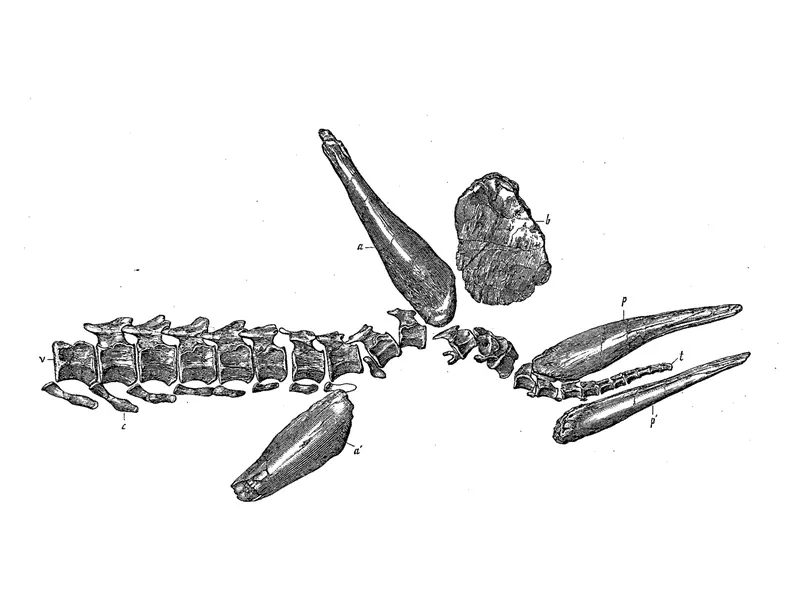
The spiky tail is nicknamed the “thagomizer”, after a Far Side cartoon by Gary Larson about “the late Thag Simmons”. Smithsonian Magazine: Watch out for that thagomizer!, 2011 “Thagomizer” isn’t an official science term: palaeontologists also just say tail spikes. American Museum of Natural History: Apex Stegosaurus fossil and “11 Questions About Stegosaurus”
Humans and Stegosaurus missed each other by over 140 million years. Smithsonian Magazine: Watch out for that thagomizer!, 2011
Stegosaurus would have defended itself from predators like Allosaurus and Ceratosaurus with its spiked tail. Natural History Museum: Stegosaurus (Dino Directory) An AMNH curator says the tail spikes were probably for defence, not attack. American Museum of Natural History: Apex Stegosaurus fossil and “11 Questions About Stegosaurus”
Of 51 Stegosaurus spikes studied, about one in ten had broken tips that had healed, a sign they were used in fights. Smithsonian Magazine: Watch out for that thagomizer!, 2011
A small head
Its head was small, and its brain was around the size of a plum, says the Natural History Museum. Natural History Museum: Stegosaurus (Dino Directory) It had one of the smallest brain-to-body size ratios of any dinosaur. Smithsonian Magazine: Meet the dinos of “Deep Time”, 2019
An AMNH curator compares the brain to a small lemon or lime. American Museum of Natural History: Apex Stegosaurus fossil and “11 Questions About Stegosaurus” The Smithsonian says it has been described as the size and shape of a bent hot dog. Smithsonian Magazine: Meet the dinos of “Deep Time”, 2019
For its small skull, though, the brain was not exceptionally small compared with other reptiles. American Museum of Natural History: Apex Stegosaurus fossil and “11 Questions About Stegosaurus”
Beak and teeth
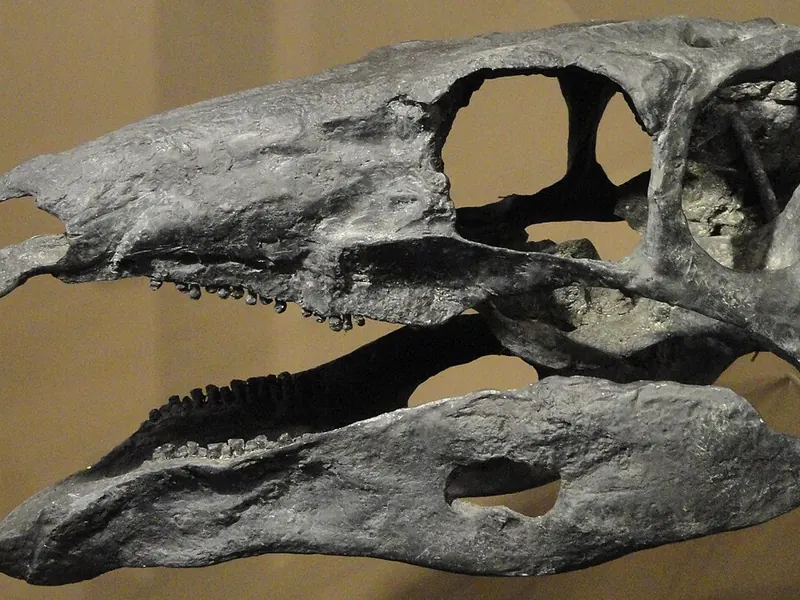
It had a beak at the front of its jaws and teeth at the back, a bit like a green iguana’s. American Museum of Natural History: Apex Stegosaurus fossil and “11 Questions About Stegosaurus” Its teeth were the size of a little fingernail. Natural History Museum: A Stegosaurus brought to life
Legs and back
Its front legs were short and back legs long, because its ancestors walked on two legs. Natural History Museum: A Stegosaurus brought to life It couldn’t run: it probably walked at the speed of a walking rhino or elephant, only a few miles an hour. Natural History Museum: A Stegosaurus brought to life
Its backbones are especially tall, making the back stiff, and nobody is sure why. Its short front legs are a puzzle too. Smithsonian Magazine: Meet the dinos of “Deep Time”, 2019
Big hip muscles and wide hips mean Sophie probably had “quite a large rear end”. Natural History Museum news: Weight of the world’s most complete Stegosaurus revealed, 2015
Skin, colour and armour
Its skin probably looked scaly, like a crocodile’s or lizard’s. American Museum of Natural History: Apex Stegosaurus fossil and “11 Questions About Stegosaurus” Stegosaurus didn’t have feathers, but a few fibres on its body can’t be ruled out. American Museum of Natural History: Apex Stegosaurus fossil and “11 Questions About Stegosaurus”
There is no direct evidence of what colour Stegosaurus was. American Museum of Natural History: Apex Stegosaurus fossil and “11 Questions About Stegosaurus”
The Smithsonian’s Stegosaurus has bony nodules guarding its neck. Smithsonian Magazine: Meet the dinos of “Deep Time”, 2019 Some Stegosaurus specimens have small pebble-like bones in the throat. Sophie doesn’t, and nobody yet knows why. Maidment, Brassey & Barrett (2015), The postcranial skeleton of an exceptionally complete individual of Stegosaurus stenops, PLOS ONE
Lengths, weights and dates for Stegosaurus are estimates from fossils, and the museums don’t all agree. The Natural History Museum gives 9 m and 152 to 145 million years ago, Sophie weighed about 1,600 kg but wasn’t fully grown, and an American Museum of Natural History curator describes an adult as about five tons. Where we give a figure, the source link says who said it and the date we checked it. See open questions for the disagreements side by side.
Next: how it lived →